Couldn't load pickup availability
Menopause Strength Training Guide for Women 40+
Menopause Strength Training Guide for Women 40+
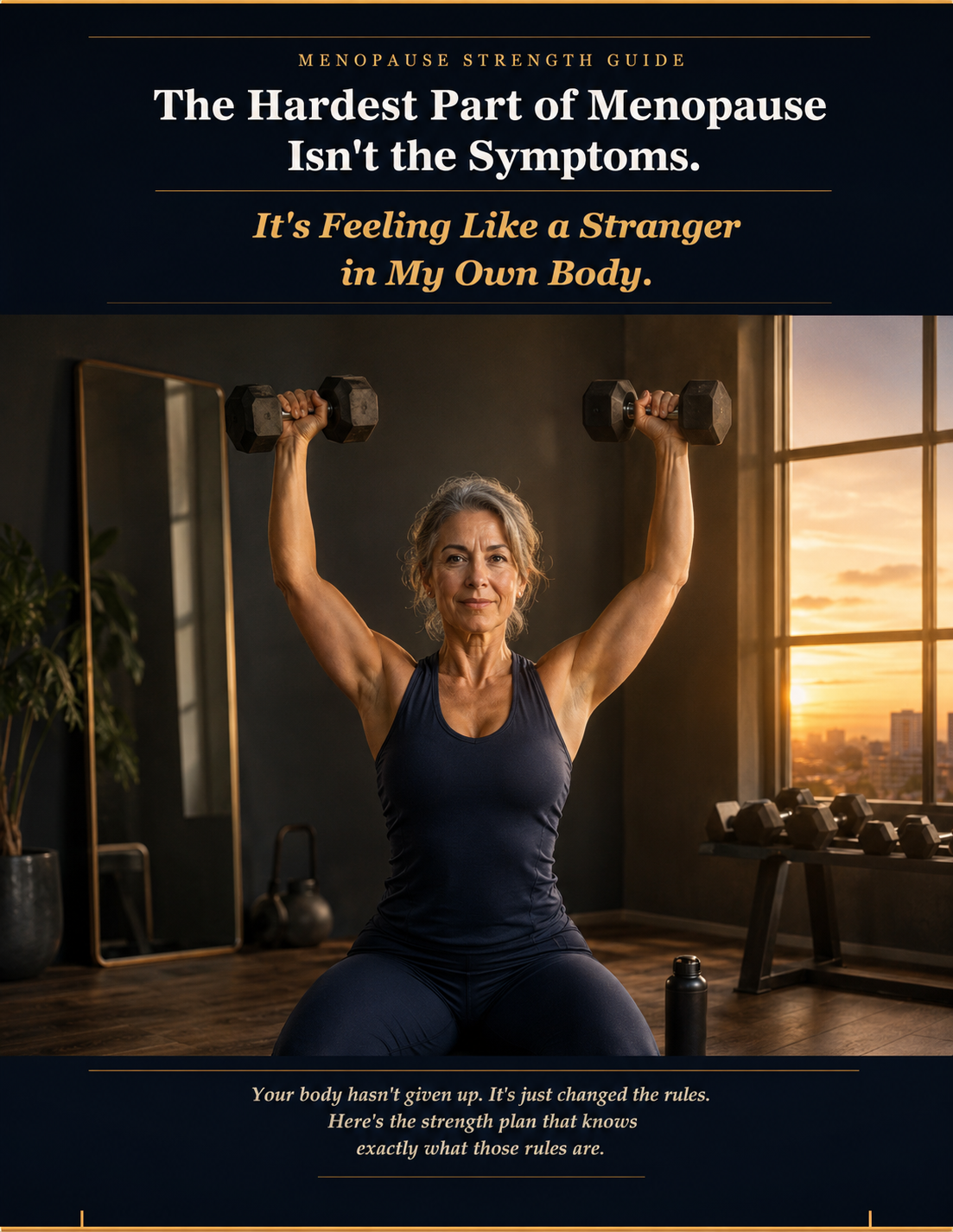
"The hardest part of menopause isn't the symptoms. It's feeling like a stranger in my own body."
Who it's for — women in perimenopause or menopause whose bodies stopped responding to the training that used to work.
The problem — mainstream fitness advice ignores hormonal change entirely, so you keep training the old way and conclude the problem is you.
What's inside — a strength plan built around what has actually changed hormonally: training, recovery and nutrition adjusted to the new rules.
The transformation — from feeling like a stranger in your own body to training with a plan that understands what it is doing now.
What actually changes, and why training must
Falling oestrogen accelerates loss of muscle mass and bone density, slows recovery between sessions, and shifts where the body stores fat. Cardio alone does not address any of these. Resistance training addresses all three, and is the single most reliable intervention available.
| Change | What helps |
|---|---|
| Muscle loss accelerates | Progressive resistance training, 2–3 sessions weekly |
| Bone density declines | Loaded, weight-bearing movement |
| Recovery slows | More rest between sessions, not more sessions |
| Protein needs rise | Higher daily intake, spread across meals |
What it will not do
Strength training will not eliminate hot flushes, and this guide does not claim it does. It has good evidence behind muscle, bone, sleep quality, mood and insulin sensitivity. It is not a substitute for HRT, and it does not take a position on whether you should take it — that is a conversation with your doctor.
Who this guide is not for
It is not a weight-loss programme and does not include a calorie deficit plan. If you are an experienced lifter looking for advanced periodisation, it will be too foundational.
Format and delivery
- Format: PDF, fully designed
- Delivery: instant download by email at checkout
- Devices: any phone, tablet, laptop or e-reader
- Printing: prints cleanly on A4 and US Letter
Frequently asked questions
Do I need a gym?
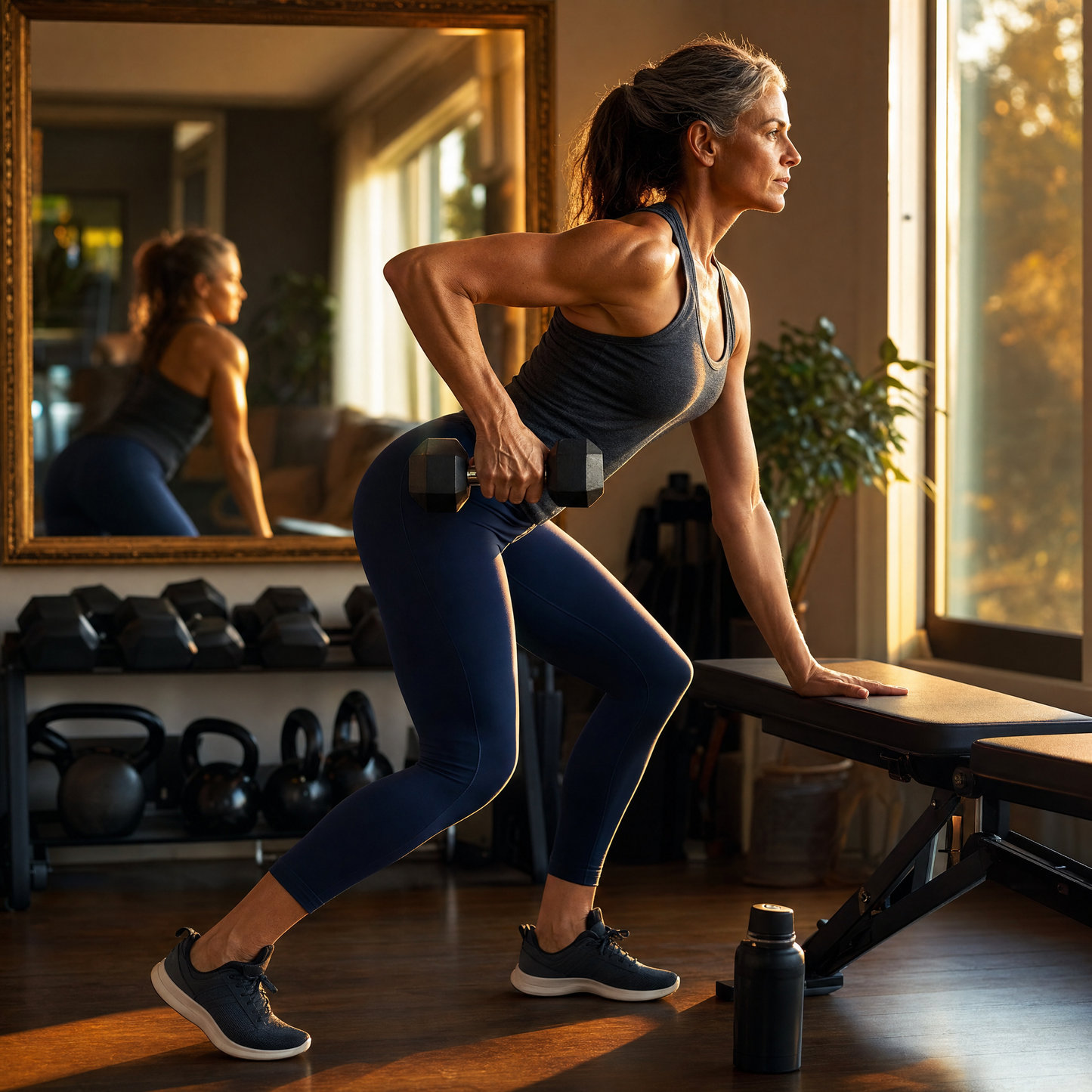
It is easier with access to weights, but the programme covers a home version using adjustable dumbbells and bands.
How much protein do I need?
Most guidance for women over 40 doing resistance training sits around 1.6 to 2.2 grams per kilogram of bodyweight daily, spread across meals.
I have never lifted before. Is this too advanced?
No. It assumes no experience and starts from movement basics.
Can I follow it on HRT?
Yes. The training principles are the same either way.
Related guides
See women's health guides and nutrition guides. For hair changes, see the Hair Loss Guide.
Educational only, and not a substitute for personalised medical advice. Speak to your doctor before starting a new exercise programme, particularly with existing cardiac, joint or bone conditions.