Couldn't load pickup availability
Anxiety Guide: Body-First Techniques That Work
Anxiety Guide: Body-First Techniques That Work
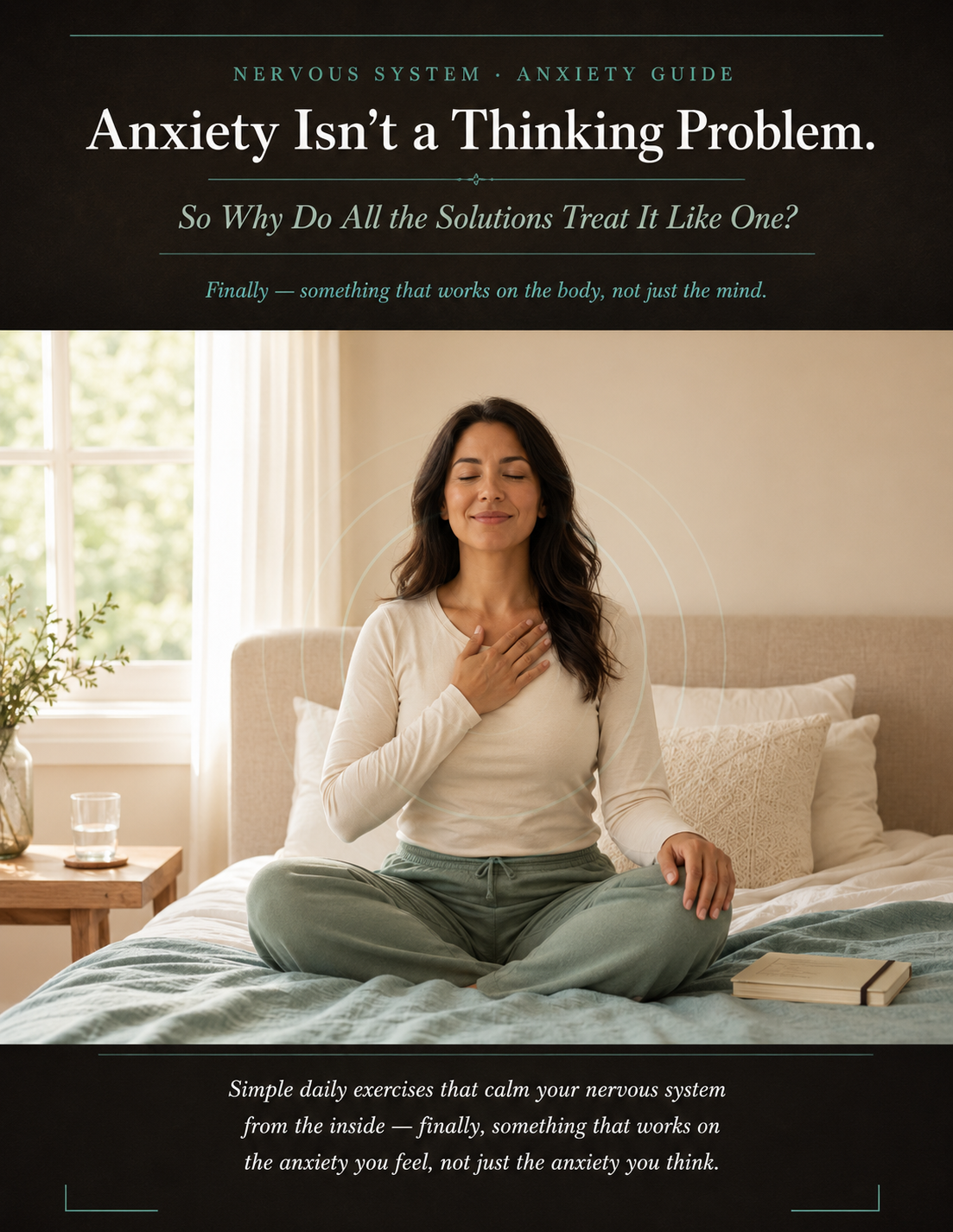
"Anxiety isn't a thinking problem. So why do all the solutions treat it like one?"
Who it's for — people who understand their anxiety intellectually, can name every cognitive distortion, and still feel it in their body anyway.
The problem — most self-help targets thoughts. But anxiety is substantially a physiological state, and you cannot reliably reason your way out of an activated nervous system.
What's inside — body-first techniques across breath, movement, temperature and sleep, and when each is the right tool.
The transformation — from arguing with your thoughts to changing the state underneath them.
Why body-first works
Anxiety involves a real physiological state: raised heart rate, shallow breathing, muscle tension. That state produces anxious thoughts as much as it results from them. Interventions acting directly on physiology can shift it faster than cognitive work alone — which is why breathing techniques calm people down and being told to calm down does not.
| Technique | Mechanism | Best for |
|---|---|---|
| Extended exhale breathing | Raises vagal tone, slows heart rate | Acute spikes |
| Physiological sigh | Two inhales, long exhale | Fast in-the-moment relief |
| Rhythmic movement | Metabolises stress hormones | Restless, wired anxiety |
| Sleep regulation | Reduces baseline reactivity | Prevention |
| Reduced caffeine | Removes a direct trigger | People with frequent spikes |
Who this guide is not for
It is not a treatment for an anxiety disorder, and it is not therapy. If anxiety is affecting your work, relationships or daily functioning, or you have panic attacks, please see a doctor or therapist — anxiety disorders respond well to treatment, and self-help is not a substitute for it. It is also not a replacement for prescribed medication.
Format and delivery
- Format: PDF, fully designed
- Delivery: instant download by email at checkout
- Devices: any phone, tablet, laptop or e-reader
- Printing: prints cleanly on A4 and US Letter
Frequently asked questions
Is this instead of therapy?
No. It is complementary. Many people use these techniques alongside CBT or medication.
How quickly does it work?
Acute techniques such as extended-exhale breathing can shift a spike within minutes. Baseline changes from sleep and movement take weeks.
Does it include cold exposure?
It covers temperature-based techniques and is clear about where the evidence is stronger and weaker.
Will it help with panic attacks?
Some techniques help in the moment, but recurrent panic attacks warrant professional assessment.
Related guides
Browse health guides. Sleep and blood sugar both affect baseline anxiety — see the Blood Sugar Guide.
Educational only and not a substitute for professional mental health care. If you are struggling, please speak to a doctor or therapist. In crisis in the US, call or text 988 for the Suicide and Crisis Lifeline.